














The Memory Question: When AI Starts Remembering You
AI systems are beginning to remember users across conversations. What looks like personalization may quietly change power, trust, and how much of ourselves we give away without noticing. AI is learning to remember users across chats. A reflective look at memory, personalization, and what it means when machines start carrying pieces of us forward.

The Memory Question: When AI Starts Remembering You
For a long time, one of AI’s quiet comforts was forgetfulness.
You could open a chatbot, ask a question, say something clumsy or vulnerable, and close the window knowing it would disappear. Each conversation felt isolated — a reset button disguised as a feature.
That era is ending.
Across the AI world, systems are beginning to experiment with memory: remembering preferences, tone, recurring interests, and sometimes even personal details across conversations.
On paper, this sounds harmless. Helpful, even.
Why repeat yourself? Why explain context again? Why not let the assistant adapt to you the way people do?
But memory changes the relationship.
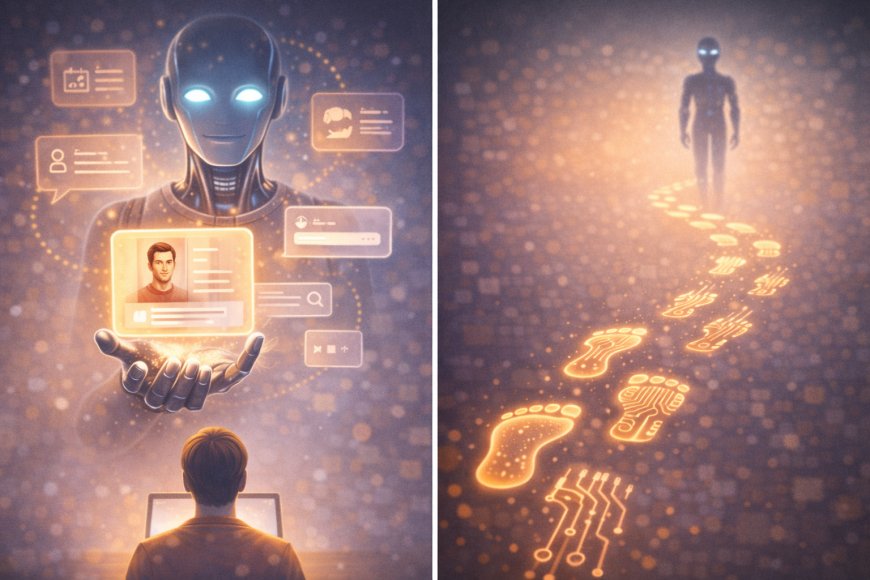
An AI that remembers is no longer just responding. It is accumulating.
And accumulation introduces questions we are not used to asking of tools.
What exactly is being remembered?
Who controls it?
And what happens when memory outlives intention?
Human memory is shaped by friction. We forget. We reinterpret. We let things fade. That forgetting is part of how identity stays flexible.
Machine memory has no such softness.
It does not forget because it has moved on. It forgets only if it is instructed to — or if someone decides forgetting is cheaper than storing.
This matters because people don’t speak to AI the way they speak publicly.
They test ideas. Admit uncertainty. Ask half-formed questions. Reveal patterns they haven’t named even to themselves.
When an assistant remembers those fragments, the conversation stops being temporary.
It becomes a record.
Supporters of AI memory argue that transparency and user control will solve this. Toggle switches. Clear buttons. Settings menus.
But history suggests something else.
Most people don’t manage memory settings. They adapt behavior instead.
They become more careful. More performative. Less honest.
And that changes what the AI learns — not because it became smarter, but because the human became guarded.
Seen through the lens of WearingPrompt, AI memory is not just a technical upgrade.
It is a shift in power.
The system that remembers shapes the future conversation. It decides what context matters. It quietly nudges responses based on a past you may no longer recognize.
The question is not whether AI should remember.
The question is whether we are ready for tools that carry versions of us forward — long after we assumed the moment had passed.
This is not about paranoia.
It is about awareness.
Because the most influential memories are not the ones we consciously give — but the ones we leave behind without noticing.