















When Ethics Becomes Policy: Governing the Data Echo
As AI reflects collective human language back to us, ethics hardens into policy. This essay frames governance as a response to data feedback loops.


Ethics was the early language
For years, artificial intelligence ethics lived primarily in discussion: conferences, academic papers, and lists of principles. Bias, fairness, transparency, accountability—important ideas, but often framed as guidance rather than obligation.
The turn toward regulation marks a shift. It acknowledges that AI systems have become infrastructure—mechanisms that shape visibility, opportunity, and authority at scale.
Ethics becomes policy not because the questions were answered, but because their consequences became measurable.
Governance begins as a response to feedback
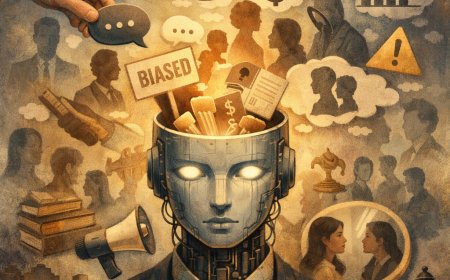
Most contemporary AI systems are trained on collective human data: language, classifications, preferences, and judgments accumulated over time. These systems compress social memory into patterns and return them as outputs.
The loop is simple:
- Humans produce language and judgments.
- Models learn statistical regularities.
- Systems generate new outputs.
- Those outputs re-enter culture as input.
Governance emerges when societies recognize this loop as a political reality, not merely a technical process.
The data echo problem
In feedback loops, repetition begins to resemble truth. What appears most frequently feels most legitimate. Over time, statistical normality risks becoming normative authority.
The danger is not only bias persistence, but expressive narrowing: minority language flattens, nuance erodes, and deviation becomes noise.
Policy introduces friction—not for efficiency, but to preserve difference.
From principles to enforceable structure
Regulation is often criticized for lagging behind technology. Yet governance by necessity follows consequence. Early frameworks focus on risk, documentation, and accountability because these are legible forms of responsibility.
One example is standardized model documentation, such as Model Cards for Model Reporting, which aims to make system behavior and limitations explicit.
Another is the institutional framing of AI risk within policy structures like the European Union’s approach to AI governance (EU policy on AI).
A broader overview of national strategies and governance initiatives can be found at the OECD AI Policy Observatory.
Governance as cultural self-recognition
Regulating AI is not only a technical exercise. It is cultural. When societies govern systems trained on their own language, they are negotiating how much of themselves they are willing to automate.
Ethics becomes policy when reflection becomes unavoidable.